
BaiYun teahouse
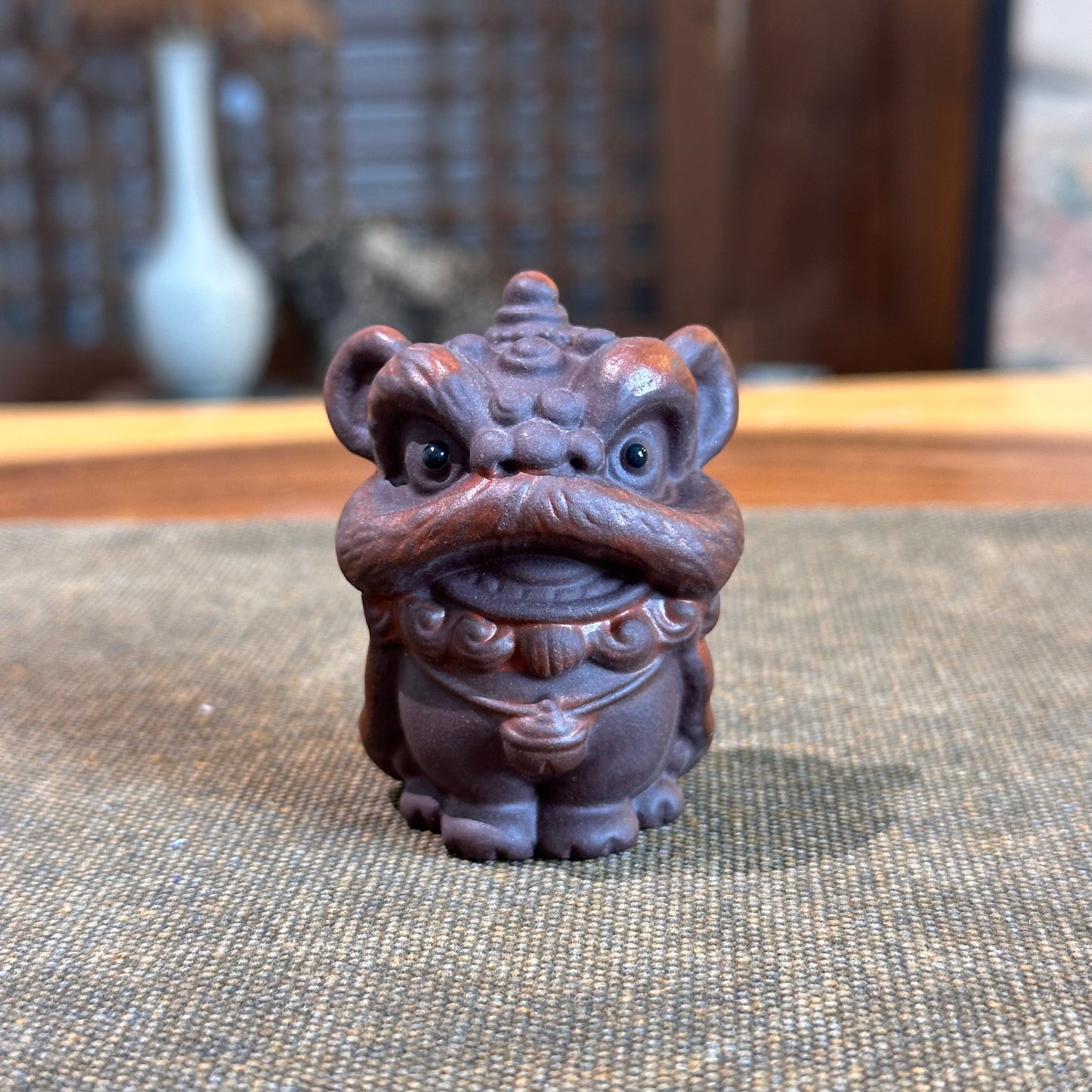
Lion Dance Tea Pet · Auspicious Guardian
Lion Dance Tea Pet · Auspicious Guardian
No se pudo cargar la disponibilidad de retiro
Lion Dance Tea Pet · Auspicious Guardian
A Little Guardian for Your Tea Table
In Chinese culture, the lion is a symbol of good fortune, prosperity, protection, and strength.
For centuries, stone lions have stood outside important buildings, temples, and imperial palaces, including the Forbidden City. They were believed to protect the entrance, ward off negative influences, and guard the people within.
Today, the lion continues to appear in one of China's most recognizable traditional performances — the Lion Dance.
The Lion and the Embroidered Ball
One of the most beloved traditional images is the Lion Playing with the Embroidered Ball.
You will often see two lions playing with a colorful embroidered ball during traditional celebrations.
The image carries an auspicious message:
Good Fortune Is Yet to Come
The embroidered ball represents good things, opportunities, and happiness rolling toward you.
The lion represents strength, prosperity, and protection.
Together, the image becomes a beautiful blessing:
Good Fortune · Prosperity · Protection · Happiness

The Lion as a Guardian
In traditional Chinese architecture, stone lions were not simply decoration.
They were placed at entrances as guardians, symbolically protecting the household and keeping harmful influences away.
The lion therefore became closely associated with wealth, status, power, and protection.
There is even a traditional story that an emperor once fell ill, and after a painting of a lion was created for him, his health improved. Whether understood as history or legend, stories like this helped strengthen the lion's association with protection and the power to drive away misfortune.
A Symbol of Status
Traditional Chinese stone lions could also reflect the status of the person or institution they guarded.
One fascinating detail is the series of curled tufts of hair carved around the lion's head.
The number of these curls was traditionally associated with rank and status.
At the imperial palace, the lions were given the highest symbolic number, reflecting the supreme status of the emperor. Officials of different ranks were traditionally represented by fewer curls.
This is one reason the lion became much more than a guardian.
It became a symbol of power, dignity, and social status.

A Lion for Your Tea Table
We transformed this ancient symbol into a Tea Pet — a small companion for your daily tea ritual.
Place it beside your Gaiwan, teapot, or tea tray.
As you pour tea, the lion slowly becomes part of your tea table, accompanying you through countless cups.
It is not merely an ornament.
It carries an old Chinese blessing into a modern tea ritual.
Lion Playing with the Embroidered Ball
Good fortune is yet to come.
May prosperity roll toward you.
May good things always be ahead.