
BaiYun teahouse
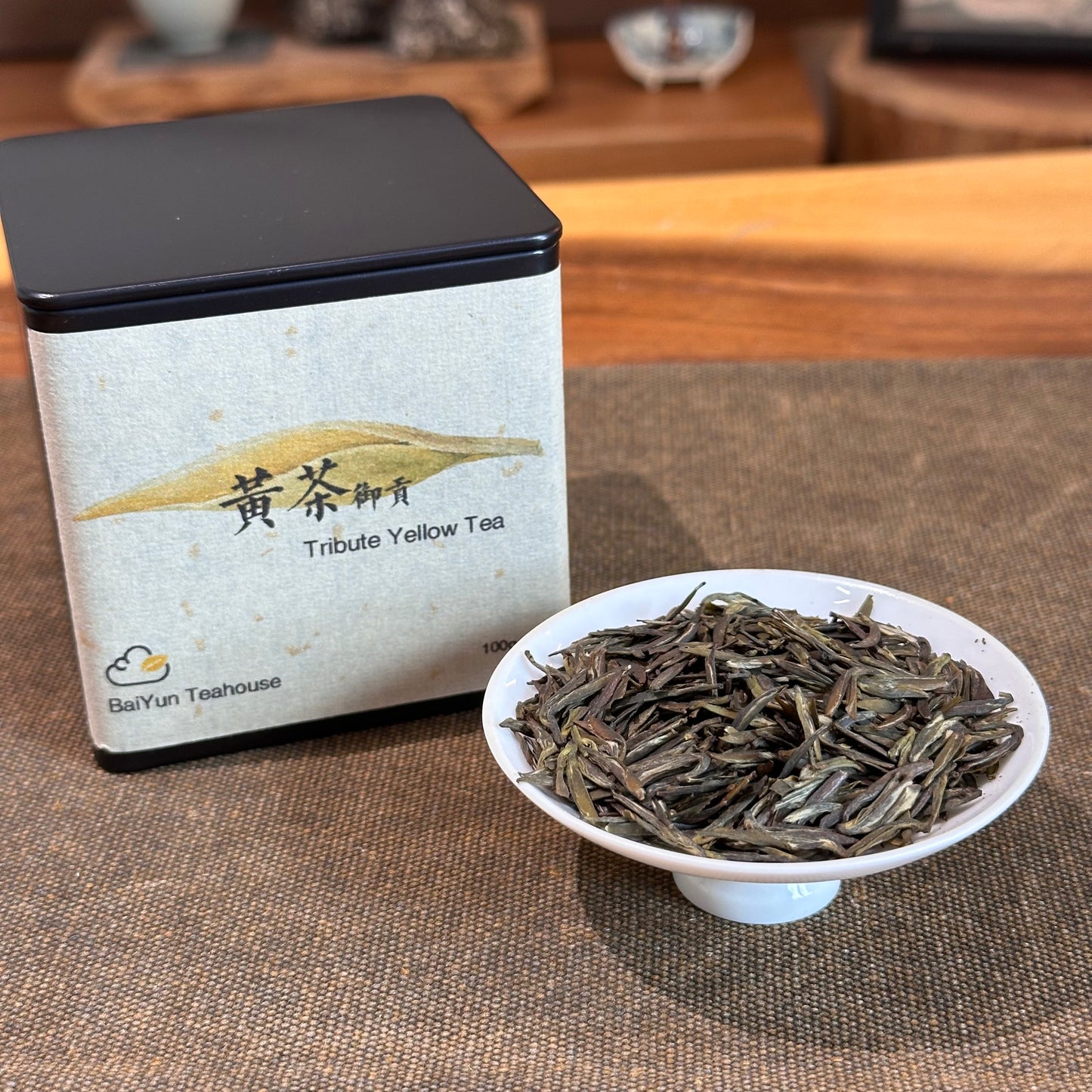
Tribute Yellow Tea 70g
Tribute Yellow Tea 70g
Couldn't load pickup availability
Imperial Tribute Yellow Tea
First Spring · First Picking · Mengding Mountain
A Tea with More Than a Thousand Years of History
From the heart of Mengding Mountain, Sichuan, comes a rare early-spring Yellow Tea made from tender single buds.
Since the first year of the Tianbao era of the Tang Dynasty (742 AD), Mengding tea has been presented as tribute to the imperial court. For more than a thousand years, this tradition continued through generations of Chinese emperors.
Today, we have brought this ancient tea tradition back through careful research of historical records, strict control of processing, and the preservation of traditional craft techniques.
This is not simply a Yellow Tea.
It is an attempt to recreate the character of the ancient imperial tribute tea.

First Spring · First Picking
Only the earliest spring buds are selected for this tea.
The tender single buds are harvested from the core region of Mengding Mountain at approximately 1,200 meters above sea level, near 30°N latitude.
The cool mountain climate, mist, and slow growth allow the young buds to develop a delicate texture and concentrated aroma.
Harvest: Early Spring
Picking: First Spring · First Picking
Standard: Single tender buds
Altitude: Approximately 1,200 m
Latitude: Approximately 30°N
Origin: Mengding Mountain, Sichuan, China

A Traditional Yellow Tea Process
Rather than relying on a modern simplified production method, this tea follows a traditional non-stir-fried Yellow Tea process.
The production is built around repeated cycles of heating and yellowing:
Initial heating
Locks in freshness while beginning the transformation of the young buds.
First yellowing
A gentle fermentation develops the characteristic tender yellow color.
Second heating
Further concentrates the tea's fragrance.
Second yellowing
Deepens the color and creates a smoother, richer character.
This process is repeated three times, gradually transforming the fresh buds into a tea with a naturally yellow liquor, yellow-golden leaves, and a soft honey-like sweetness.
The Result
Golden-yellow liquor · Tender yellow leaves · Honey sweetness · Soft floral fragrance
Flavor Profile
Aroma
Delicate floral fragrance with a soft honey-like sweetness.
Taste
Smooth, mellow, and naturally sweet.
Liquor
Clear golden-yellow.
Texture
Fine, soft, and rounded with a gentle finish.
Aftertaste
A lingering honey sweetness that gradually returns after each sip.
This is a Yellow Tea designed for slow drinking rather than intensity.
Its character is delicate at first, then gradually reveals greater sweetness and depth.
A Brief History of Mengding Tea
Western Han Dynasty
According to tradition, Wu Lizhen planted seven tea trees on Mengding Mountain during the Western Han Dynasty, marking one of the earliest stories of cultivated tea in China.
Tang Dynasty · 742 AD
During the first year of the Tianbao era under Emperor Xuanzong, Mengding tea officially entered the imperial tribute system.
From this point onward, the tea was presented to the imperial court year after year.
Song Dynasty
During the reign of Emperor Shenzong, Mengding tea became closely associated with the tea-for-horses trade.
Later, Wu Lizhen was honored with the title “Ganlu Puhui Miaojì Zen Master.”
The legendary seven tea trees on Shangqing Peak became known as the Imperial Tea Garden.
Ming Dynasty
Mengding tribute tea gradually shifted toward tender bud teas.
Famous styles such as Huangya, Shihua, Yabai, and Que She became renowned throughout China, while the famous Ganlu tea was also developed during this period.
Qing Dynasty
The tea from the Imperial Tea Garden became associated with imperial ceremonies and ancestral temple offerings.
Mengding tea continued to be classified into different levels of tribute tea for the imperial court.
A Lost Imperial Craft, Recreated
After the Ming and Qing dynasties, many traditional techniques used to produce these historic teas gradually disappeared.
For more than three decades, tea makers and researchers have studied historical records and carefully reconstructed the traditional production process.
By combining historical research with traditional and intangible cultural heritage techniques, this ancient style of Yellow Tea has been brought back to life.
Today, you can experience a tea inspired by the imperial tribute teas of ancient China.
Brewing Guide
Gongfu Brewing · Gaiwan
Tea: 4g
Gaiwan: 150ml
Water: 85°C
Pour the water over the tea and serve immediately.
The short infusion preserves the delicate aroma and sweetness of the young buds.
Glass Cup
Tea: 3g
Glass: 300ml
Water: 85°C
Steeping: Approximately 30 seconds
The transparent glass allows you to appreciate the delicate buds as they slowly unfold.
Thermos
Tea: 3g
Water: 600ml
Water Temperature: 85°C
Add the tea and hot water directly to the thermos and enjoy slowly throughout the day.
Imperial Tribute Yellow Tea
First Spring · First Picking
Single Tender Buds
Mengding Mountain · Sichuan
1,200m Elevation · 30°N
A delicate tea carrying the memory of an ancient imperial tradition.
More than a thousand years of history, brought into a single cup.