
BaiYun teahouse
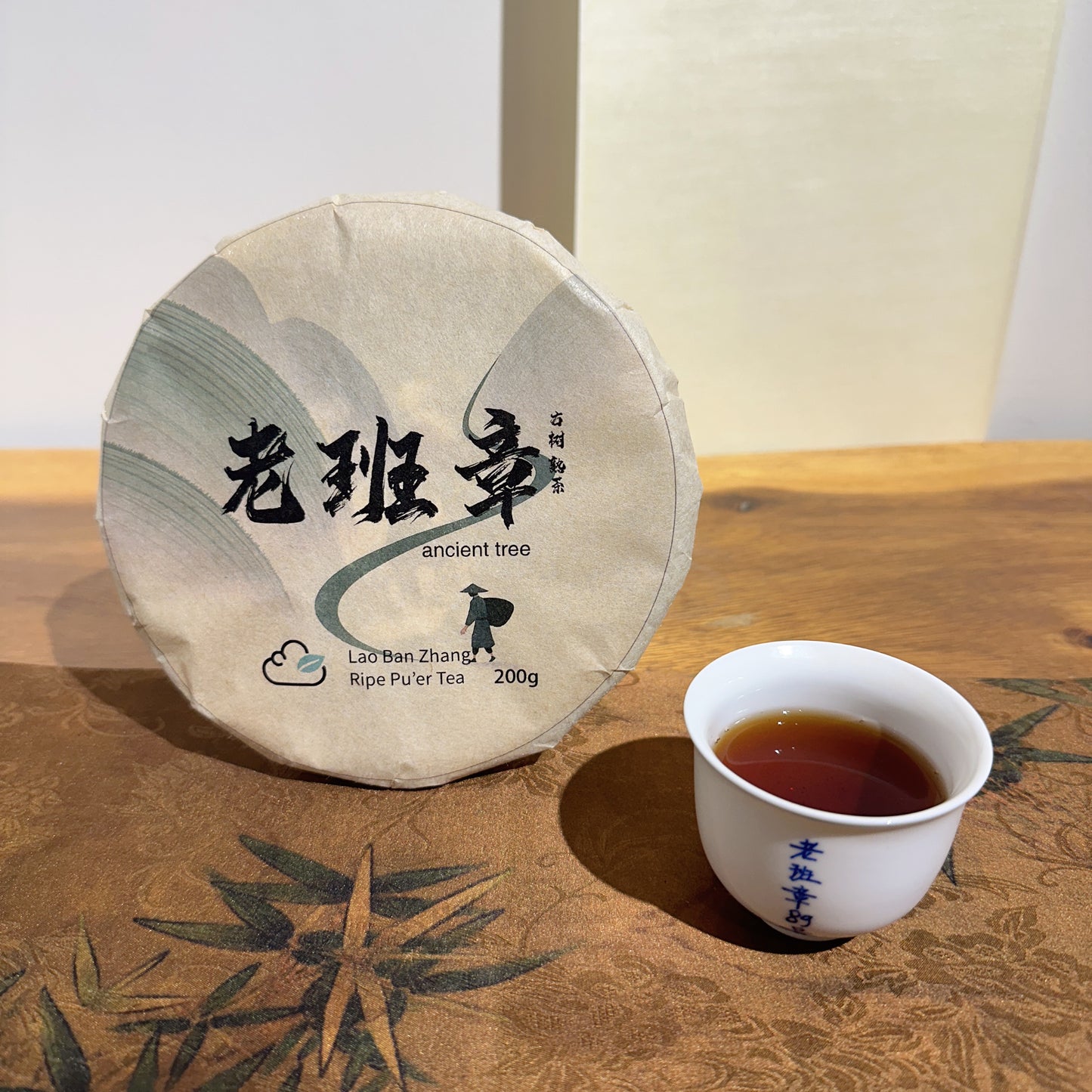
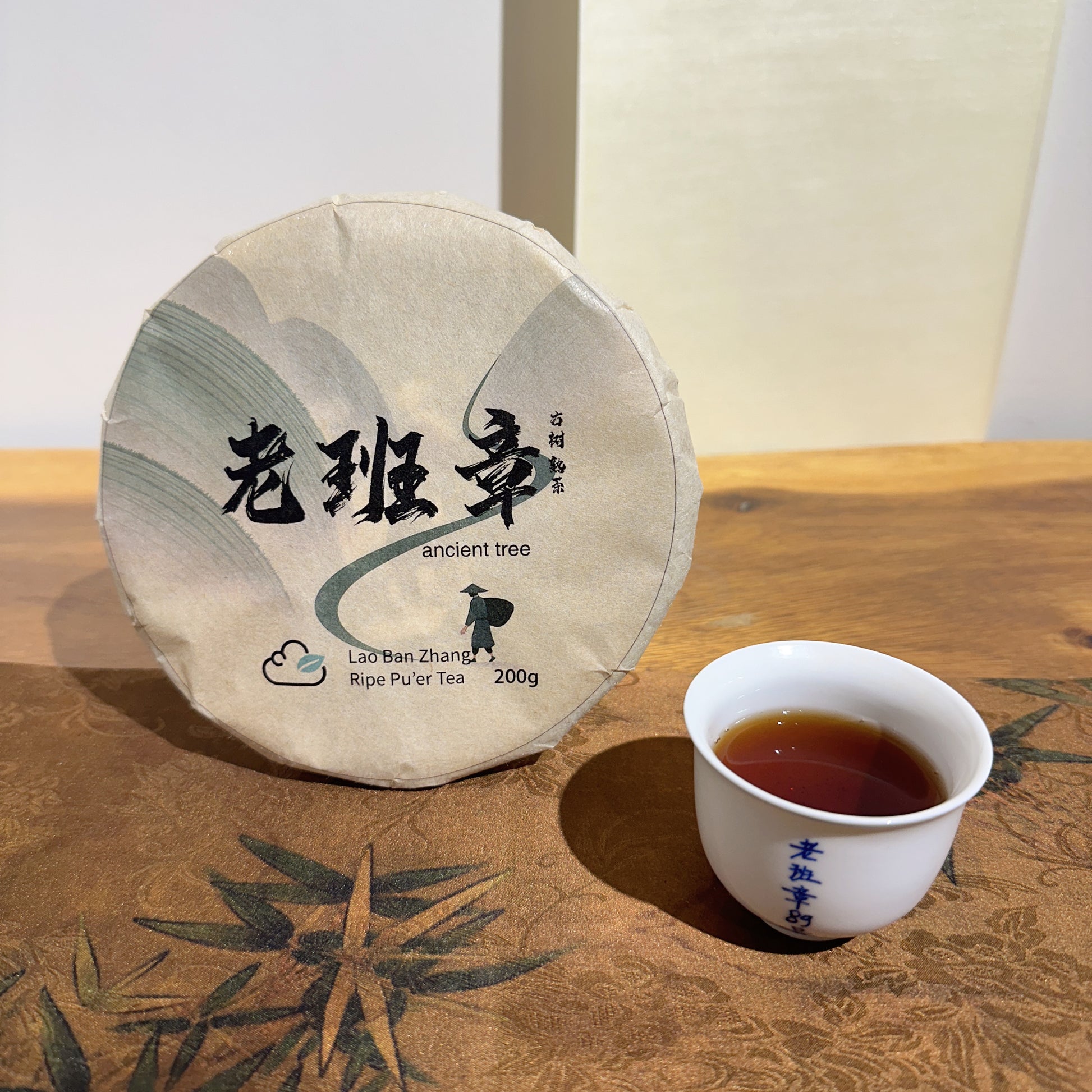
2025 Lao Banzhang Ripe Pu‘er Tea Cake 200g(From Our Own Tea Garden)
2025 Lao Banzhang Ripe Pu‘er Tea Cake 200g(From Our Own Tea Garden)
Couldn't load pickup availability
Ancient Tree · Head-Spring Harvest · Fermented with Spring Water & Bamboo Baskets

(From Our Own Tea Garden)
Ancient-Tree Pure Material: “Pure material” means all the leaves come from the core Lao Banzhang region. “Ancient trees” means the leaves are picked only from large, old trees.
Blended Material: Most of the leaves come from Lao Banzhang, combined with a smaller portion from other regions, or a mix of leaves from ancient trees and younger trees.
All of our Lao Banzhang tea comes entirely from ancient-tree material. Please note the difference between ancient-tree pure material and blended material.
From Lao Banzhang — The King of Gongfu Tea Gardens
Lao Banzhang is not just a name — it’s a legend. Nestled deep in the mountainous terrain of Bulang Mountain Township, Lao Banzhang village is famed as the “Number One Pu-erh Village in China.”
The region’s high elevation (~1800m), dense vegetation, and abundant mists form a uniquely rich microclimate. With 1,500mm of annual rainfall and a year-round average temperature of 18.7°C, the environment is ideal for ancient tea trees to flourish.
Its soil is dark, fertile, and rich in humus, while remaining breathable—encouraging deep root systems to draw vital minerals and nutrients. The nearby Nada Meng Reservoir, one of the largest natural water sources in the region, provides sustained hydration throughout the year.
This cake is crafted exclusively from first-spring leaves from old trees in the core area of Lao Banzhang village, not blended or spliced. It reflects not only the terroir, but also the untamed power of this "overlord of ancient tea forests."

Pure, Powerful, and Patiently Fermented
-
Selected from rare ancient tree clusters, not mixed with plantation tea
-
Hand-picked leaves from towering trees; spring flush only
-
Traditional sun-withering and iron-wok hand-fixation
-
Bamboo basket fermentation process — elevated 30cm off the ground
-
Fermented with pure spring water, enhancing sweetness and vitality
-
No “dui wei” (stacking smell) — only clean, vibrant, well-aerated tea
-
Controlled fermentation in professional ripening rooms: precise humidity and temperature
-
Entire process respects ancient techniques, allowing future aging and transformation

Sensory Profile
-
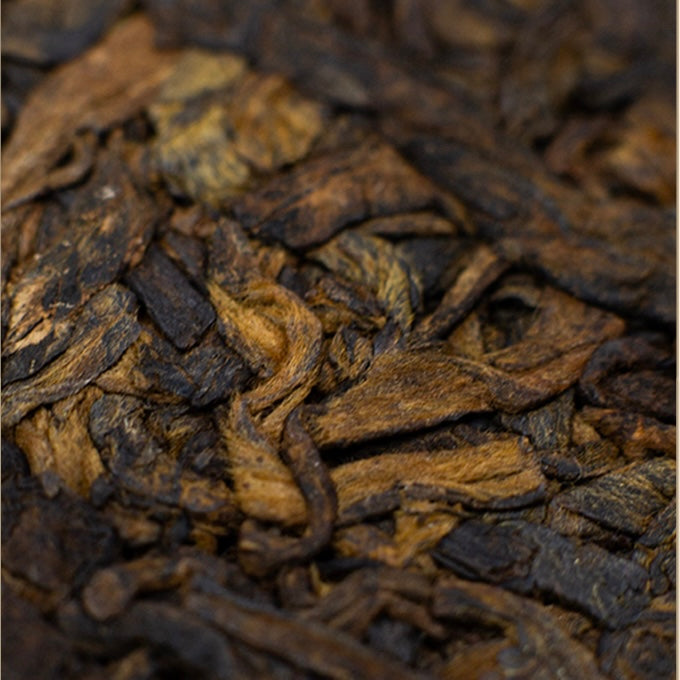
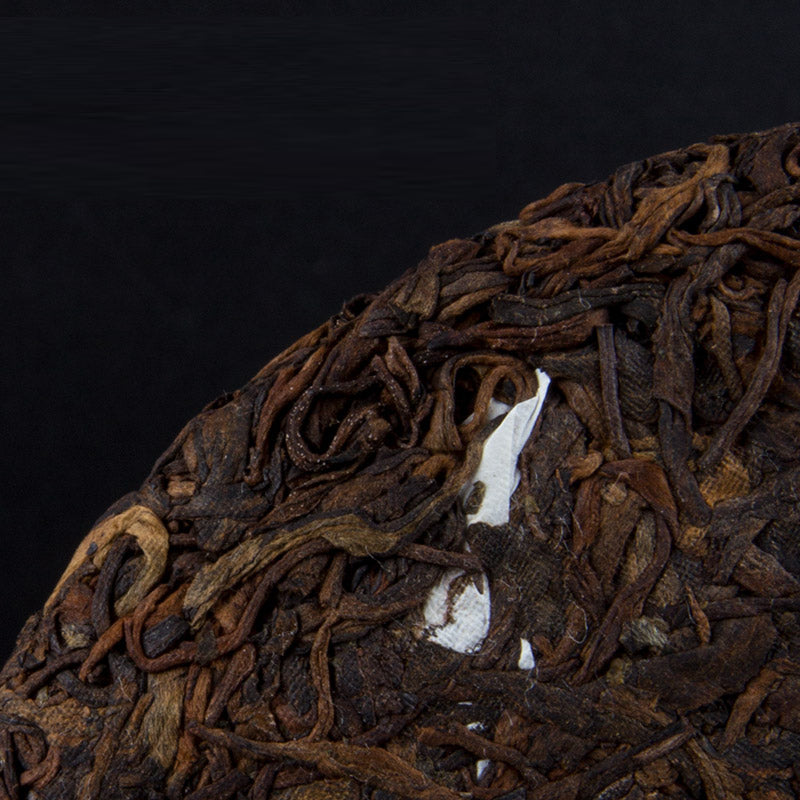
Appearance: Glossy, chestnut-brown cake with plump, sturdy leaves
-
Aroma: Gentle waves of aged wood, camphor, and dried fruit after preheating the vessel
-
Liquor: Thick and wine-red, like aged Burgundy; brilliant clarity
-
Taste: Smooth, full-bodied, velvety and coating; extremely high viscosity
-
Character: Warm and grounding, yet with surprising mountain energy akin to raw Pu-erh
-
Finish: Long-lasting with subtle sweetness and clean woody notes
-
Infusion Endurance: Maintains richness through 15+ infusions

Handcrafted with Precision
Every step honors the craft of traditional Pu-erh production:
-
🌿 Hand Harvested – ancient trees require manual climbing to pick the right buds and leaves
-
🌤 Natural Sun-Wilting – gently evaporates moisture, allowing fragrance to emerge
-
🔥 Hand-Fixed in Iron Wok – veteran artisans manage the heat to preserve enzyme activity
-
🌀 Hand-Rolled – breaks down cell walls, aiding future fermentation
-
☀️ Sun-Drying – infuses the leaves with the region’s pure air and light
-
🧺 Bamboo Basket Fermentation – elevated 30cm off the ground, breathable and clean
-
💧 Spring Water Wetting – mineral-rich mountain spring enhances sweetness and clarity
-
🪶 Hand-Broken Post-Fermentation – ensures even distribution and complete leaves
-
🧪 Professional Fermentation Rooms – tightly controlled temperature & humidity for active microbial life
Brewing Instructions (Gaiwan Recommended)
| Parameter | Suggested Amount |
|---|---|
| Teaware | Gaiwan (lidded bowl) |
| Water Temp | ≥ 95°C (203°F) |
| Water Volume | 150ml |
| Tea Amount | 8g |
Produced in the Spring of 2025.
Brewing Guide:
-
Rinse/Wake the Tea – Quick 5-second pour and discard to awaken the leaves
-
1st Infusion – Steep for ~8 seconds
-
2nd to 6th Infusions – 8–10 seconds per brew
-
7th to 8th Infusions – 10–15 seconds per brew
-
9th Onward – Add ~5 seconds per brew
Adjust steeping time and strength based on personal preference.

No Stacking Smell · Clean Taste · Long-Term Aging Value
Most ripe Pu-erh on the market suffers from “dui wei” — the musty smell of improper pile fermentation.
This tea avoids that entirely. Our elevated bamboo fermentation system ensures clean airflow, while spring water wetting nourishes but does not suffocate the leaves. The result: a tea that is immediately drinkable, yet rich in aging potential.

Final Note — A Ripe Pu-erh with the Soul of a Wild Mountain Warrior
Lao Banzhang is known for its bold, untamed spirit — and that’s often associated with raw Pu-erh.
Yet this ripe Pu-erh captures that same force, now mellowed and deepened by time and fire.
From the richness of its liquor to the quiet power of its aroma, this cake offers not just flavor—but presence.
It does not shout. It hums — with age, with patience, and with the resonance of ancient roots.

(With the owner of Laobanzhang No. 89 Ancient Tea Garden)
All Baiyun Teahouse teas are certified under ISO 9001 (Quality Management System) — ensuring that every step of production is standardized and traceable —
and ISO 22000 (Food Safety Management System) — guaranteeing that every stage, from raw leaves to final packaging, meets international food safety standards
From tea leaf to teacup, every step follows world standards —
where quality is assured, safety is safeguarded, and trust is protected.